Sai Katan perheet
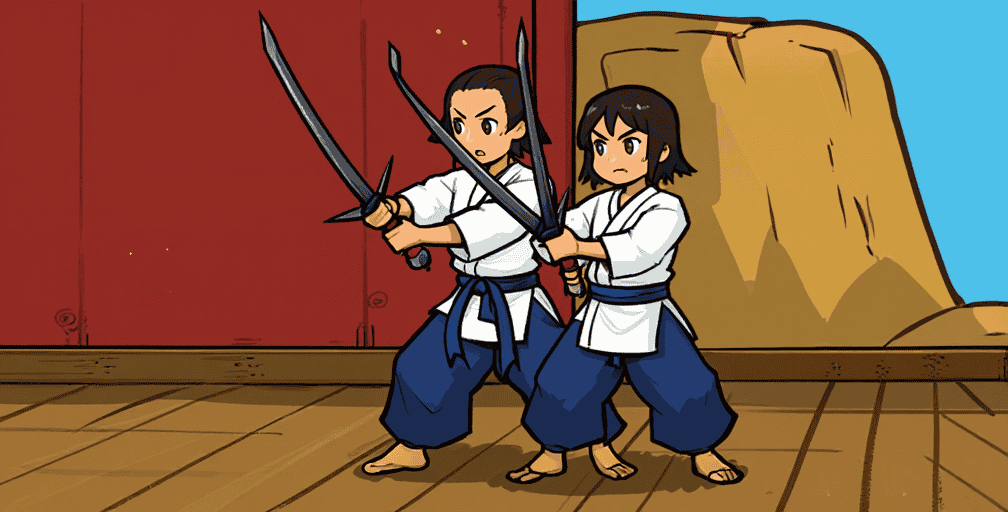
Taira-linja säilyttää kahdeksan sai-kataa. Bushukan tutkimusryhmän (武集館) analyysit tunnistavat selkeitä rakenteellisia suhteita näiden kahdeksan muodon välillä ja jakavat ne kolmeen perhekökonaisuuteen sekvenssien, embusenin (liikeradan) ja taktisen painotuksen perusteella. Katso Taira-linjan opetusohjelma, miten nämä sopivat laajempaan kahdeksan aseen järjestelmään.
Kolmen klusterin analyysi
Bushukan-analyysi alkaa havainnoinnista, että Taira tunnisti seitsemän kahdeksasta sai-katastaan historialliseen perinteeseen, kun taas Jigen no Sai tunnistetaan nimenomaisesti hänen omaksi luomuksekseen. Tämä jättää seitsemän "vanhaa muotoa" vertailtavaksi.
Klusteri 1: Hamahiga-perhe
浜比嘉の釵 (Hamahiga no Sai) esitetään rakenteellisena "lähdemuotona". Sen sekvenssit toistuvat kahdessa läheisesti liittyvässä katassa:
| Kata | Japani | Suhde |
|---|---|---|
| Hamahiga no Sai | 浜比尌の釵 | Lähdemuoto: rakenteelliset elementit toistuvat molemmissa alla |
| Hamagoten yaka no Sai | 浜御殿屋可阿の釵 | Jakaa monia fraaseja Hamahigan kanssa; läheisesti sukua |
| Hantagwa no Sai | 端多小の釵 | Rakenteellisesti lähellä; samankaltainen embusen ja tekniikat |
Nämä kolme muodostavat yhden alarypärkiteen: Hamahiga-rakennemallin laajennukset tai uudelleenjärjestelyt.
Klusteri 2: Tsuken–Chatan–Tawada-perhe
Toinen tiivis klusteri jakaa monia sekvenssejä ja taktisia ajatuksia, jotka eroavat Hamahiga-ryhmästä:
| Kata | Japani | Suhde |
|---|---|---|
| Tsuken Shitahaku no Sai | 津堅志多伯の釵 | Tämän alarypärkiteen ydin |
| Chatan Yara no Sai | 北谷屋良の釵 | Jakaa avainphraseeja Tsuken Shitahakun ja Tawadan kanssa |
| Tawada no Sai | 多和田の釵 | Sama "perhe" eri painotuksin ja yhdistävin askelin |
Bushukan-analyysi ehdottaa, että nämä kolme jakavat yhteisen taustakuvion, joka myöhemmin eriytyi kolmeksi erilliseksi kataksi.
Klusteri 3: Kochijo–Jigen-pari
| Kata | Japani | Suhde |
|---|---|---|
| Kochijo no Sai | 湖城の釵 | Luettu Tairan kahdeksan perinteisen sai-katan joukkoon |
| Jigen no Sai | 慈元の釵 | Tairan oma luova työ; nimenomaisesti "lähes sama kuin Kochijo" |
Jigen no Sai suoritetaan manji-sain (卍釵) kanssa, muunnelmalla, jossa piikit kaareutuvat vastakkaisiin suuntiin. Taira mukautti Kochijo-rakenteen hyödyntämään tämän aseen ainutlaatuista geometriaa lisäten tiheämpiä hon-te (ortodoksinen ote) -pistoja. Tuloksena on toiminnallisesti Kochijo-luova muunnelma itsenäisen katan sijaan.
Sisäinen karttayhteenveto
Hamahiga-perhe:
  浜比嘉の釵  →  浜御殿屋可阿の釵
             →  端多小の釵

Tsuken–Chatan–Tawada-perhe:
  津堅志多伯の釵  ↔  北谷屋良の釵  ↔  多和田の釵

Kochijo–Jigen-pari:
  湖城の釵  →  慈元の釵 (Tairan luova sovellus, manji-sai)
Tyylienvälinen esiintyminen
Kaikki viisi klusterin juurnimeä (Hamahiga, Chatan Yara, Tsuken, Tawada ja Kochijo) esiintyvät myös moni-organisaation kobudo-kataluetteloissa, vahvistaen että muut koulut ovat sisällyttäneet versioita näistä perheistä. Koreografiset versiot eroavat; perhejuuret ovat jaettuja.
Lähteet
- Sai (ase) — Wikipedia: Vahvistaa sain historiallisen käytön okinawalaisessa kotipoliisissa (ufuchiku) väkijoukkojen hallintaan ja pidätyksiin
- Taira Shinken — Wikipedia: Huomauttaa manji-sai-muunnelman olevan Tairan oma luomus Jigen no Saita varten
- Tutkimussivu: 新編・増補 琉球古武道大鑑 (1997) ensisijaisena julkaistuna lähteenä Tairan kahdeksalle sai-katalle